
📜 ریشهها | Our Roots
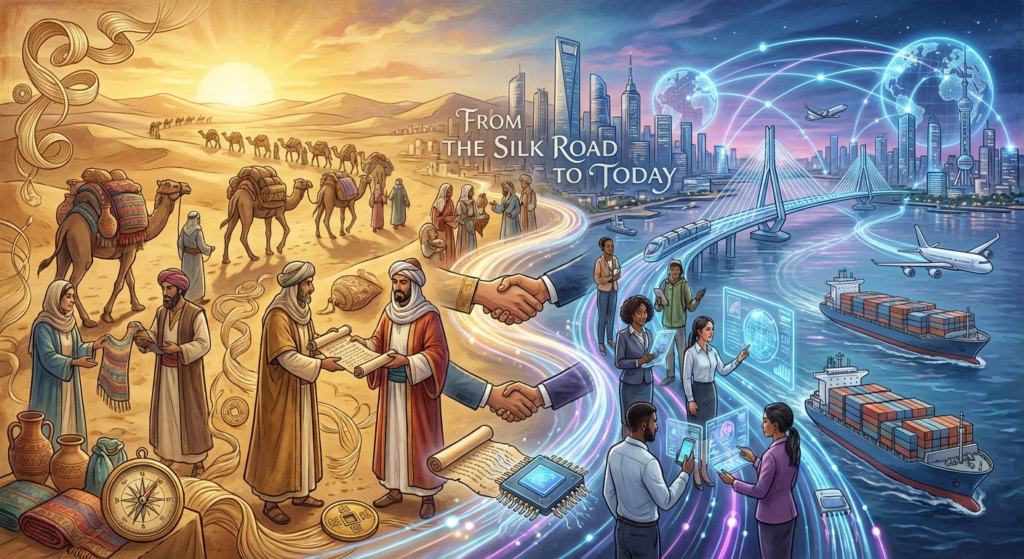
From the Silk Road to Today
Our roots go back to a time when trade was the backbone of civilizations. Roads were not only routes for goods, but also meeting points for cultures, ideas, and human trust.
At the heart of this history lay the Silk Road—an extensive network of trade routes connecting the East and the West.
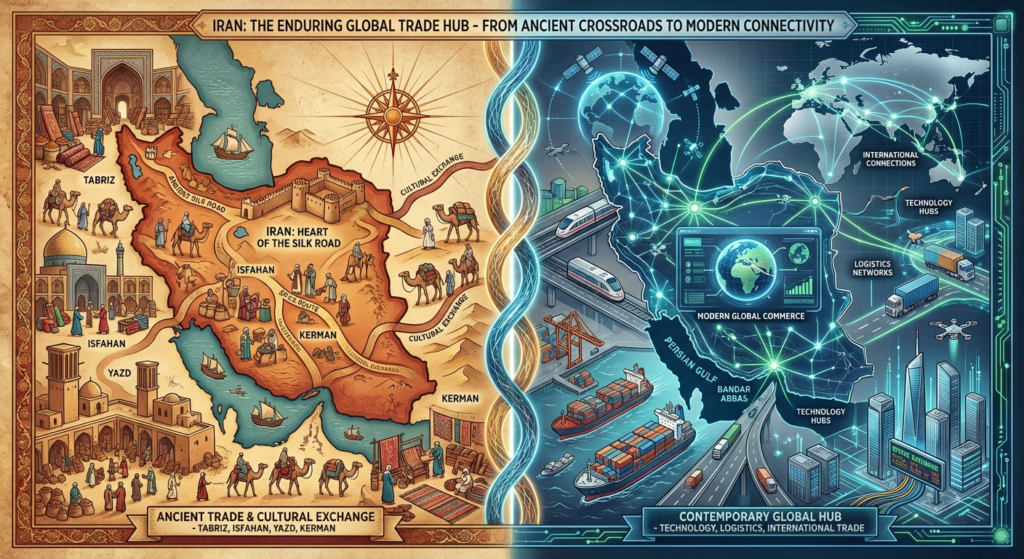
Iran: The beating heart of trade from ancient times to the present day.
Due to its strategic geographical location, Iran served as a major crossroads of the Silk Road. Major Iranian cities—such as Tabriz, Isfahan, Yazd, and Kerman—were thriving commercial hubs featuring bustling caravanserais and bazaars that facilitated the exchange of goods, culture, and ideas. Iran was not merely a host to caravans; it was a central hub for managing international trade.
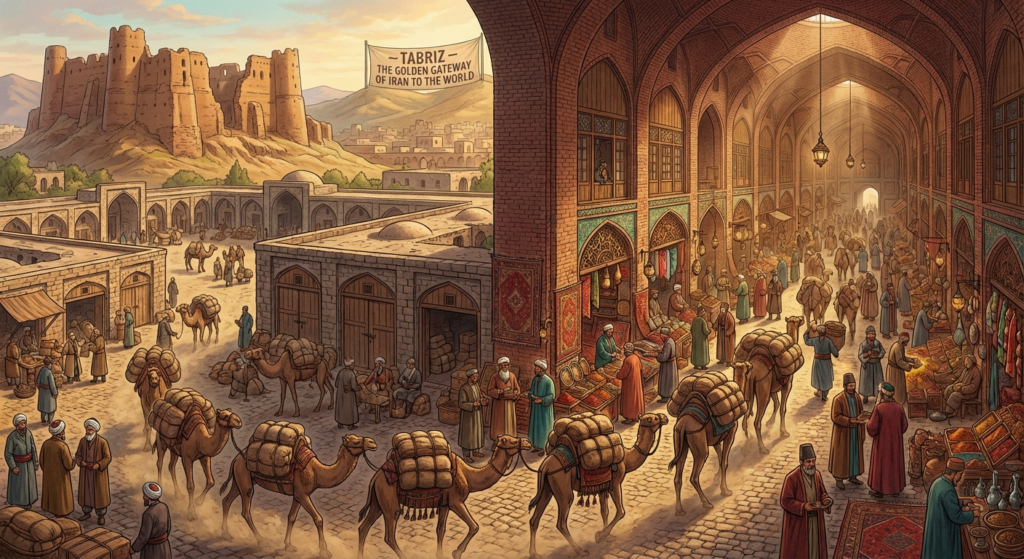
Tabriz: Iran’s Golden Gateway to the World
Among these cities, Tabriz held a special place—a city that served as a major thoroughfare connecting Iran to the Caucasus, Anatolia, Europe, and Asia.
With a history spanning nearly ten centuries (a thousand years), the historic Tabriz Bazaar is one of the world’s largest and oldest covered markets and is currently inscribed on the UNESCO World Heritage List. It served as the beating heart of international trade and a hub for renowned domestic and foreign merchants.
Devechi District: The Merchants’ Neighborhood
In the heart of Tabriz’s historic district—neighboring the thousand-year-old bazaar and the Arg-e Alishah—lies an authentic neighborhood whose name is derived from the trade of its inhabitants: “Davehchi” (meaning “camel driver”). Until the early 20th century, this neighborhood served as a haven for merchants, caravan leaders, and caravanserai owners. In an era when camels were the sole means of transporting heavy cargo, the Davehchi quarter was recognized as the hub of commercial activity for Tabriz’s merchants and caravan operators.
The Culture of Naming: Identity Born of Commerce
In this historic neighborhood, surnames often originated from individuals’ trades or lines of business. The etymology of the distinguished name “Shalchilar” bears witness to this very origin:
- Shal: Refers to a shawl, fabric, or textile.
- -chi: An agentive suffix denoting association with or attribution to a profession.
- Shalchi: An individual active in the field of fabric sourcing, purchasing, selling, and trading.
- Lar: A plural suffix in the Azeri language.
- Shalchilar: Meaning “family of fabric merchants”; men who held the pulse of the textile trade.
The Shalchilar Family Heritage
Over 300 years of reputation, commerce, and service to the community.
The Shalchilar-Shalchi family is one of Tabriz’s long-established families, with a name inextricably linked to commerce, trust, innovation, and social responsibility for over three centuries. Originating from the historic Dovehchi neighborhood—a key hub of trade in Tabriz—the family has preserved and expanded a legacy of integrity and a sterling reputation across generations.
Generation 1 – Unwritten Roots (Fathers and Ancestors)
Although the names of the family’s earliest ancestors have been lost to the mists of time, they were the true founders of the “Shalchilar” trade and reputation in the Tabriz bazaar. An examination of business records indicates that the family’s verifiable history and roots extend back to approximately a century before the birth of its first documented figure—tracing back to around 1725 AD (circa 1103 SH).
Generation 2 – The Start of a Journey (Haji Haj-Agha Shalchi)
The first figure whose name is recorded in the family’s written history is Haji Haj-Agha Shalchi. Heir to a century-old legacy, he was born on Eid al-Adha in the year 1240 AH (corresponding to 1203 SH and approximately 1824 CE) in the historic Doveh-chi neighborhood of Tabriz. Drawing upon the honor and repute of his ancestors, he endowed the family with a cohesive identity and paved the way for future generations in the realm of commerce.
Haji Haj-Agha had two children: a daughter named “Surah” and a son named “Abdul-Hamid.”
Ms. Surah married Yousef Shalchilar; the union produced a daughter named Sariyeh and three sons named Hossein, Reza, and Mahmoud. Meanwhile, Abdolhamid married Homa Shalchilar (Yousef’s sister), further strengthening the ties between the two families.
3rd Generation – Consolidating the Economic Position (Haj Abdolhamid Shalchi)
Haj Abdolhamid Shalchi (second from the left) with prominent figures of the Shotorban neighborhood, prior to the year 1290 SH (1912 AD).
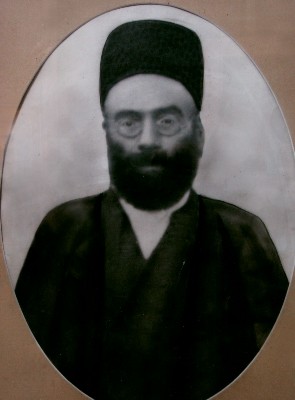
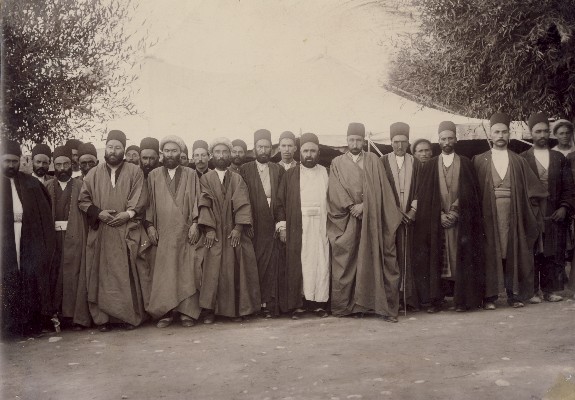
His son, Haj Abdolhamid Shalchi (born 1226 SH / 1847 CE), was the head of the family and a prominent, respected merchant of Tabriz.
His trading house was established in the beating heart of the Tabriz Bazaar—specifically, the “Saraye Mozaffariyeh”—and was renowned as a major hub for the extensive trade of shawls, *termeh* (fine brocade), and carpets with neighboring countries, particularly the Ottoman Empire. It was during this golden era, through his acumen and perseverance, that the name “Shalchi” transcended its status as a mere family surname, becoming a symbol of reliability and unassailable repute within the Tabriz trading community.
The marriage of Haj Abdolhamid and Homa Khanom produced four children: a daughter named “Sahebeh” and three sons named “Mohammad-Ali,” “Ali-Akbar,” and “Abolhassan.”
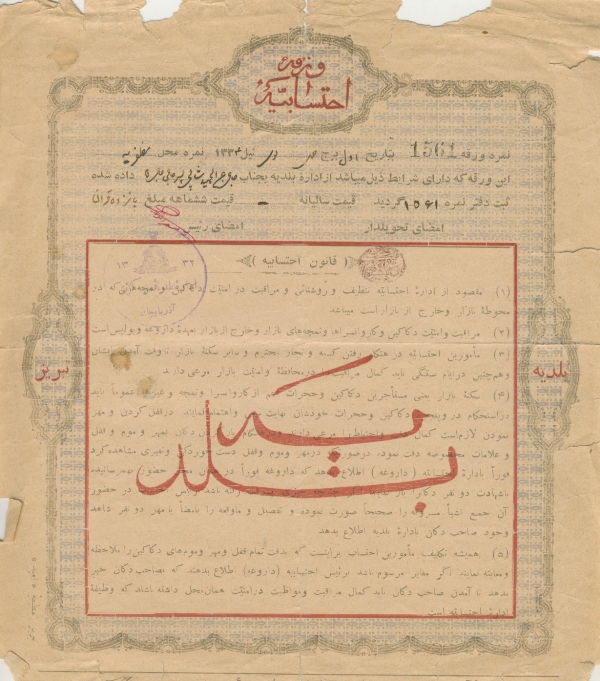
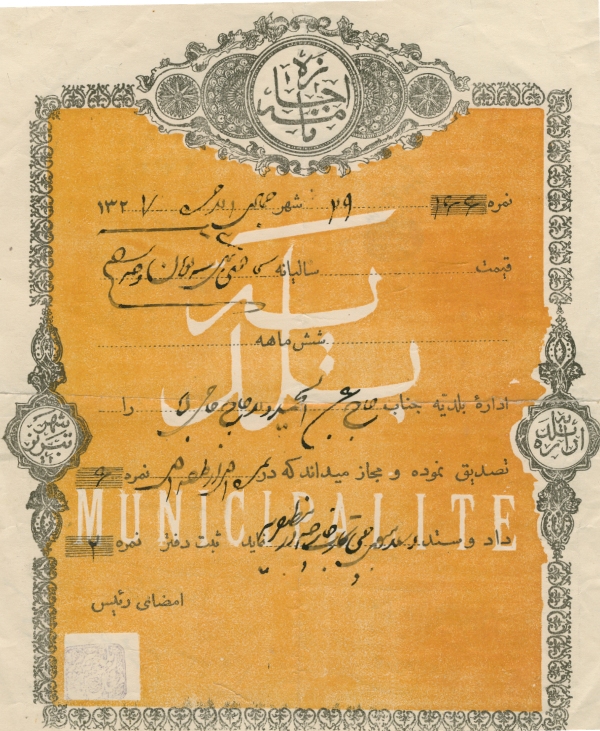
| An image of the trading permit issued by the Tabriz Municipality in 1327 AH to Haj Abdolhamid Shalchi for her business at Saray-e Mozaffariyeh. |
Generation 4 – The Union of Families and the Continuation of the Lineage
In this generation, the kinship ties between the various branches of the family grew deeper and more intertwined; on the one hand, “Sahebeh Khanom” (daughter of Haj Abdolhamid) married her maternal aunt’s son, “Haj Mahmoud Agha Shalchilar” (son of Soreh Khanom), and on the other, “Ali-Akbar” (son of Haj Abdolhamid) entered into marriage with his maternal aunt’s daughter, “Sariyeh Khanom” (daughter of Soreh Khanom).
These intermarriages and family ties demonstrate that the “Shalchi” and “Shalchilar” families not only share a common lineage and extended family background but have also maintained exceptionally close and unbreakable kinship and economic bonds throughout history—a factor that has significantly contributed to the cohesion, wealth, power, and enduring prestige of these families in the Tabriz market.
History of the Shalchilar Family: A Legacy of Authenticity, Industry, and Innovation
1. The Roots of Cross-Border Trade and the Founding of a School of Thought
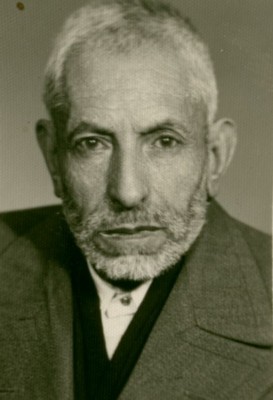
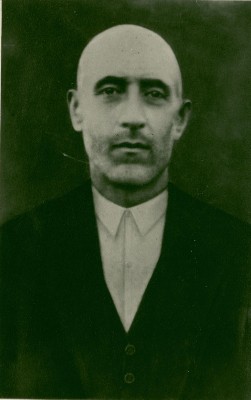
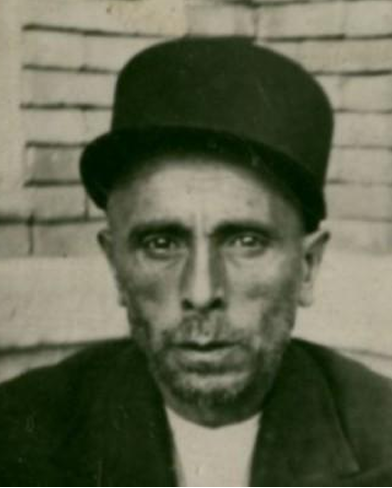
Haj Hossein Agha Shalchilar
Haj Mahmoud-Agha Shalchilar
Haj Reza Agha Shalchilar
2. The historical transition to the industrial age and the synergy of business elites
The 1930s marked a turning point in Iran’s economic history—a period when macroeconomic policies shifted toward supporting domestic production and curbing imports. During that critical juncture, venturing into the nascent industrial sector was a high-risk endeavor for many traditional merchants. Yet, the Shalchilar family—prominent, highly respected merchants and influential members of the Tabriz Chamber of Commerce—stepped into the realm of national production with a vision that was ahead of its time.
With a clear understanding of the country’s needs and through a strategic partnership with the esteemed Khosrowshahi family, they took a historic step by establishing the “Qazvin Spinning and Weaving Factory”—one of the largest industrial projects of that era (and one of only two licensed factories in the entire country).
The Khosrowshahi family is regarded as one of the architects of Iran’s modern industrial sector; by establishing major enterprises such as the Minoo Industrial Group and Toliddarou, they brought about a profound transformation in the nation’s economy. The family’s entrepreneurial and managerial spirit has endured to this day, extending onto the global stage—exemplified by prominent figures like Dara Khosrowshahi, the CEO of the global giant Uber, who hails from this distinguished lineage. The strategic partnership between the Shalchilar family and such renowned figures stands as clear testimony to the synergy among business elites and the authenticity of their approach to developing the national economy.
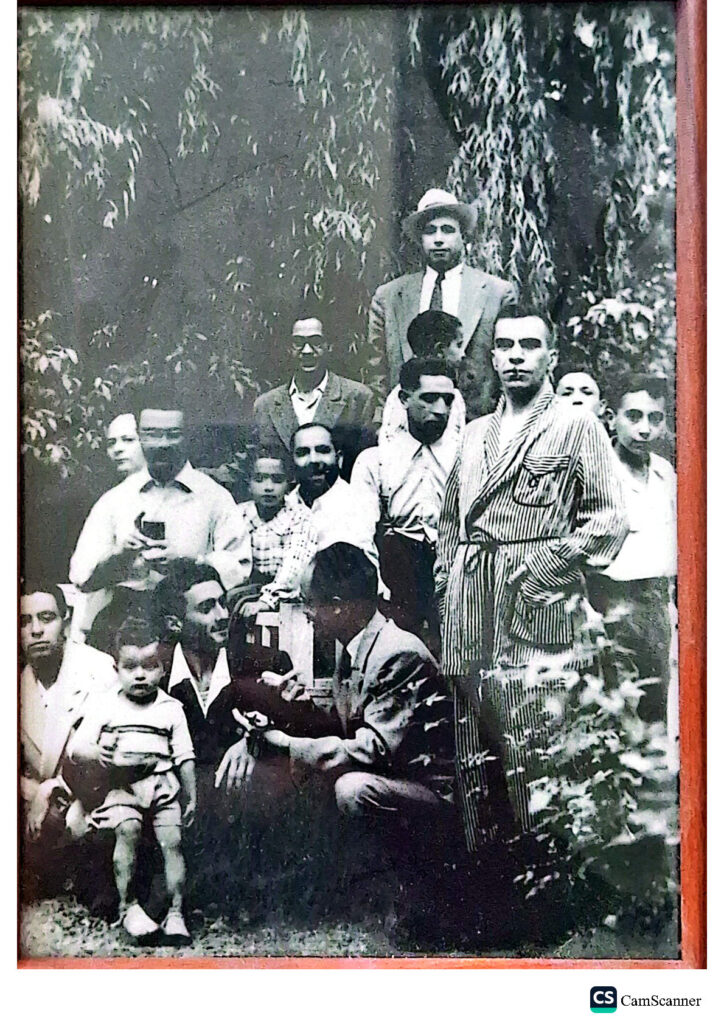
| The Shalchilar and Khosrowshahi families out and about together. |
| Council of Ministers resolution (Farvardin 1314 SH / April 1925); official document authorizing the establishment of the Qazvin textile factory, issued at the request of “Haj Hossein Shalchilar and Brothers.” |
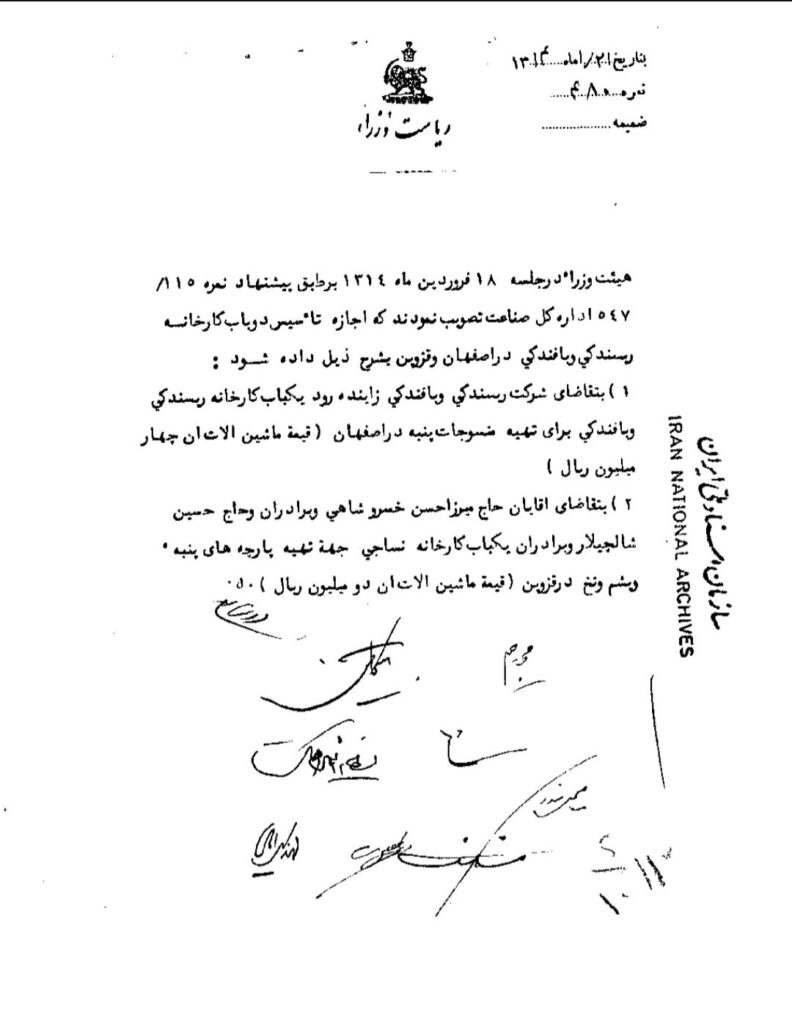
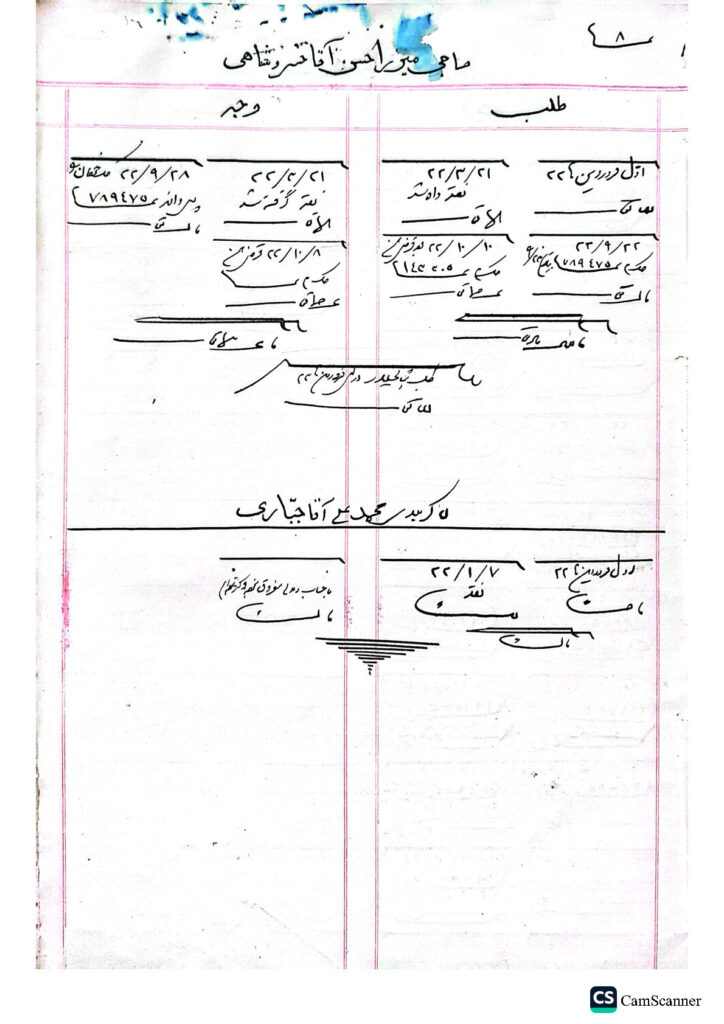
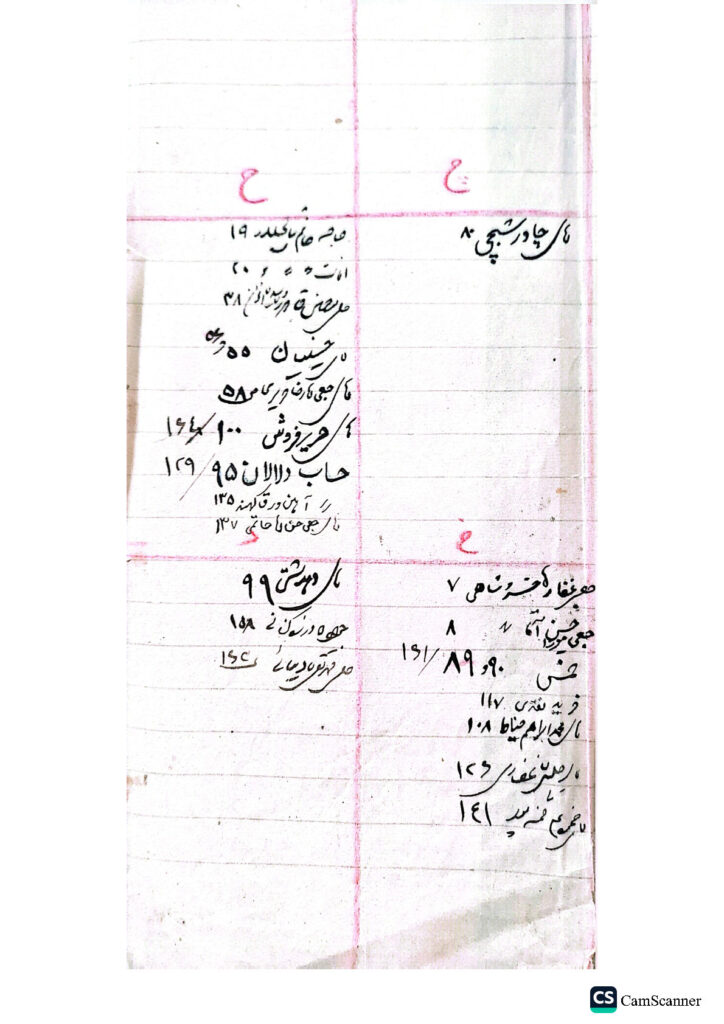
| Business dealings between the Shalchilar and Khosrowshahi families. |
A masterpiece of strategy in site selection and macro-management.
The astuteness of the Shalchilar family was not limited merely to the boldness of establishing the factory; it was also embodied in their precise strategies. The choice of the city of Qazvin for the construction of this massive plant was based on meticulous calculations:
- Geopolitical reasons: distance from the northern borders and immunity to the political dangers of that era.
- Human Resources: Access to a cost-effective and talented workforce.
- Commercial location: Proximity to Tehran, the country’s beating heart and new commercial hub.
Despite the considerable distance from Tabriz, the management and administration of this massive factory were handled directly by the partners and their children—including the late Haj Mohsen Shalchilar—through their constant presence and meticulous supervision.
4. Infrastructure Development: From Technology Imports to City Lighting
The factory was equipped to the highest global standards of the time. In 1936, state-of-the-art textile machinery was procured from Germany, Italy, and England. The magnitude of the project is evident in its scale: a complex spanning a total area of 16,000 square meters, featuring over 3,000 square meters of production halls and equipped with 100 modern weaving machines.
The scale and capacity of the factory’s infrastructure were such that, until 1328 SH, it supplied the electricity needed to light the city of Qazvin and played a vital role in urban development.
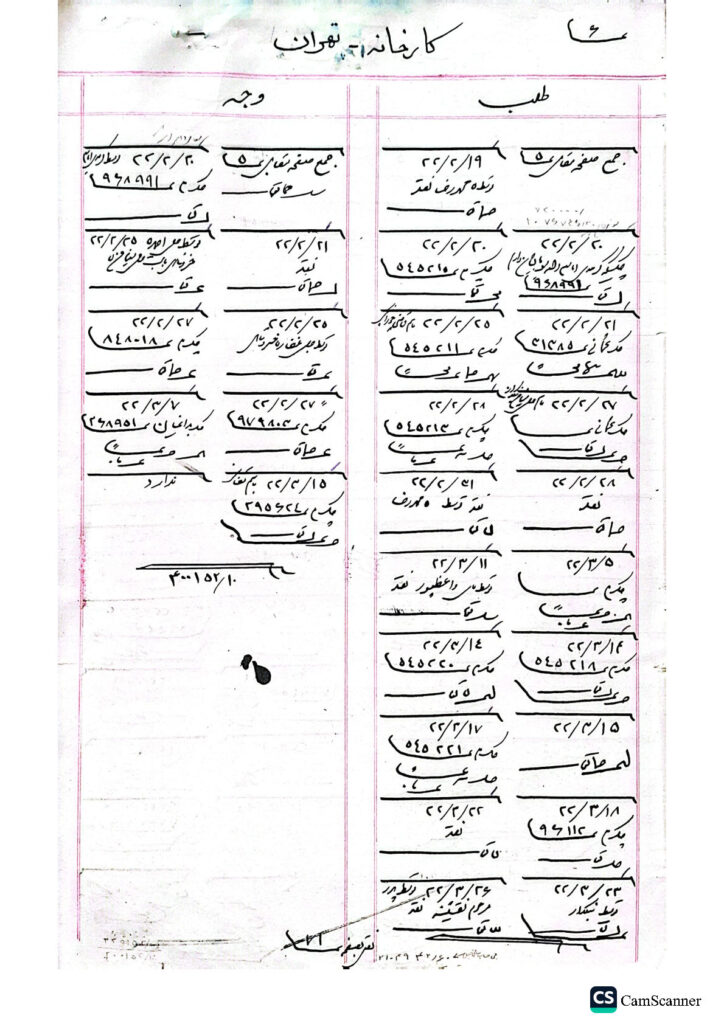
| Documents from commercial offices – textile factory – Tehran office |
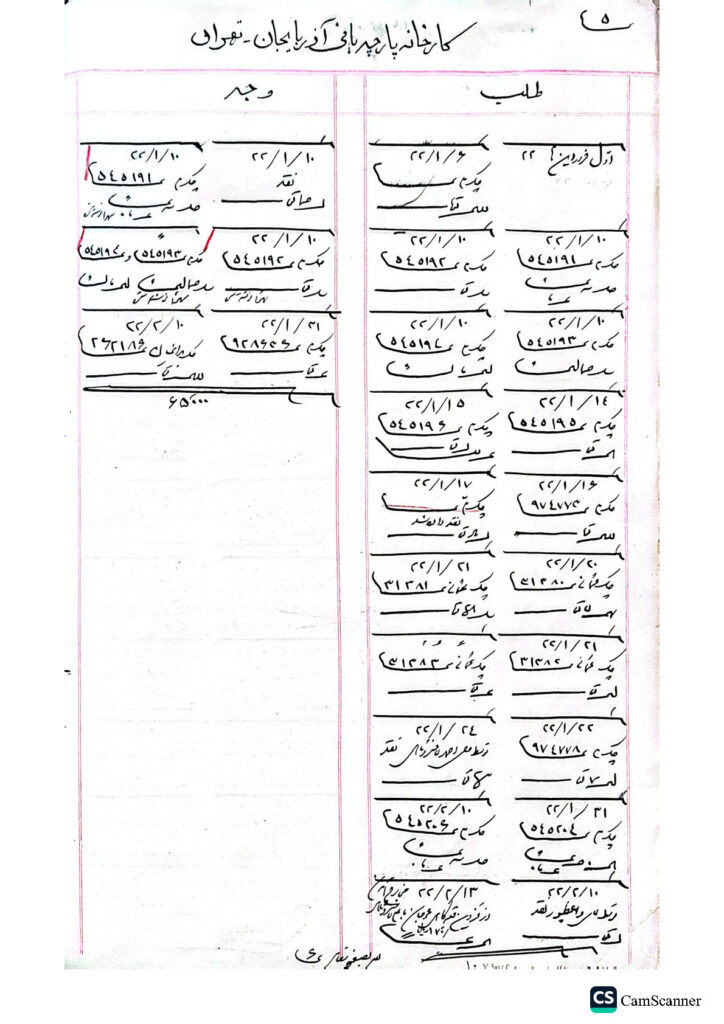
5. Progressive thinking; pioneering women’s employment and completing the production chain.
The founders’ progressive vision and sense of social responsibility extended well beyond the confines of industrial development. Historical records indicate that by the year 1335 (1956), this vast enterprise employed over 320 male and female workers. At a time when women’s presence in the industrial sector was minimal, their commitment to employing women demonstrated a development-oriented mindset.
The establishment of an advanced dyeing unit at the factory also marked a major stride toward industrial independence, leading to impressive production records: a daily output of 2,500 meters and an annual production of between 800,000 and 1,000,000 meters of fabric.
6. Capturing the market with world-class quality and a national perspective.
Through a shrewd initiative, this enterprise undertook the production of thick, durable fabrics tailored to the needs of rural populations—a product that met the demands of a large segment of society. The quality of these goods was so high that, according to official reports from the National Bank, they competed effectively with premium foreign products. The enterprise held such strategic importance that, in 1956, the then-Minister of Labour personally monitored the factory’s developments via a confidential letter to the Ministry of Industries.
7. Strategic transition from industry to health: The start of a new chapter in the capital.
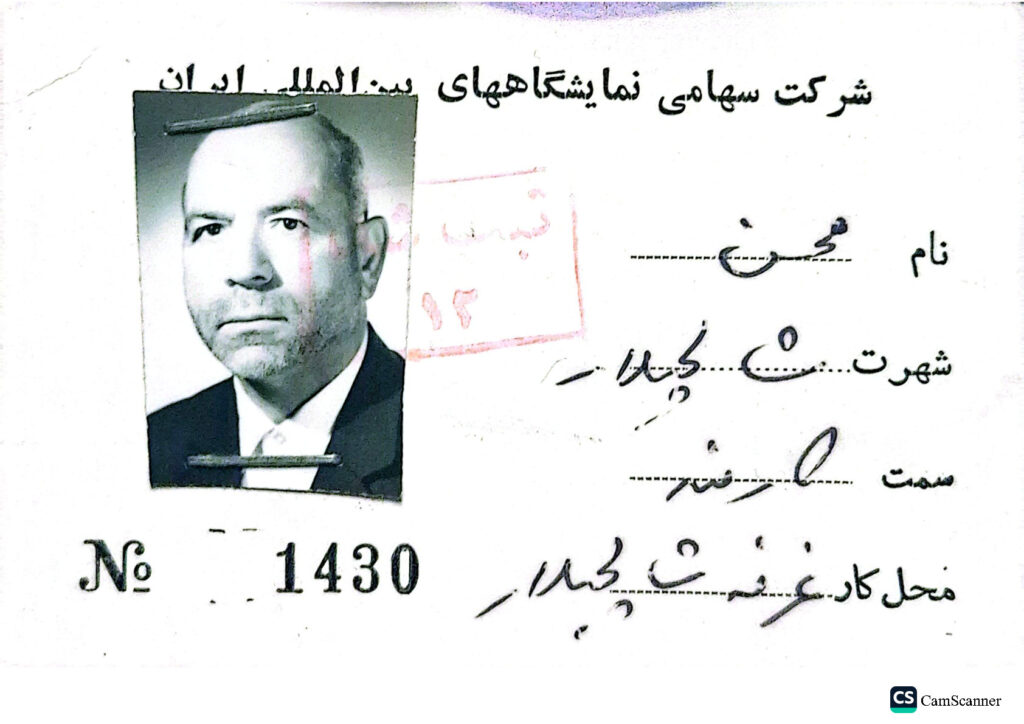
As bureaucratic structures grew increasingly complex and the need for closer ties with government ministries to secure major permits became essential, the Shalchilar family—demonstrating great foresight—shifted the focal point of their operations to Tehran. By establishing themselves in the capital and maintaining a commanding presence in the “Soltani Bazaar,” the sons of Haj Mahmoud Shalchilar—Haj Mohsen Agha, Haj Mehdi Agha, and Haj Khalil Agha—paved the way for a major transformation.
Drawing upon decades of international reputation and experience, they made a strategic shift from the textile industry toward meeting society’s fundamental, health-oriented needs. Securing distributorships for the world’s most prestigious pharmaceutical companies—including UCB—laid the foundation for the family’s powerful and historic entry into the healthcare sector.
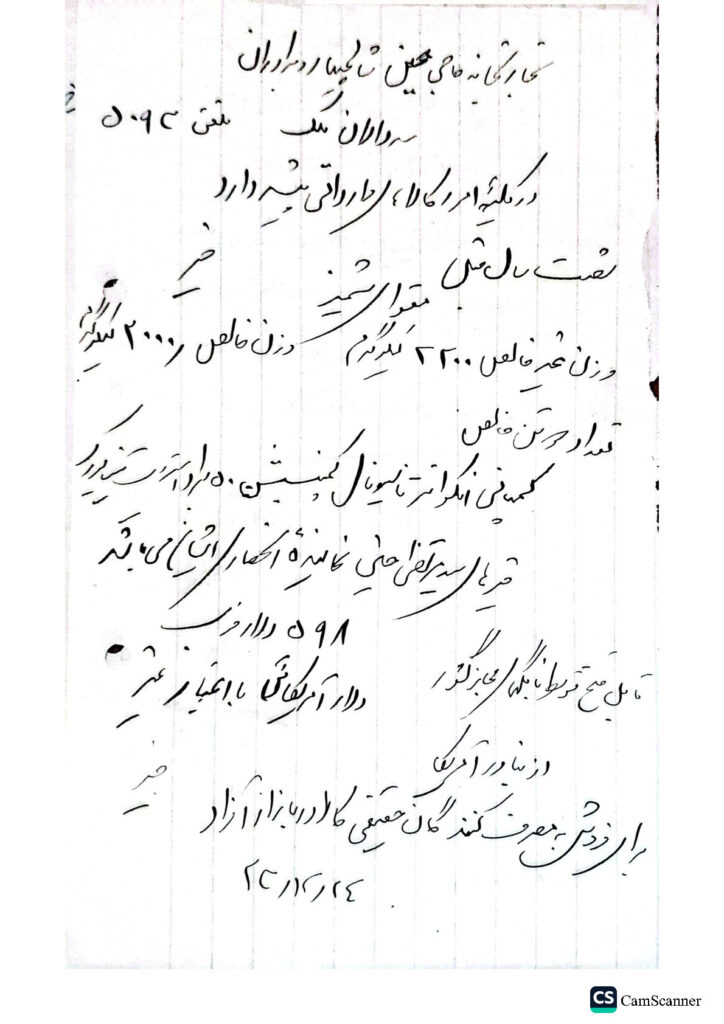
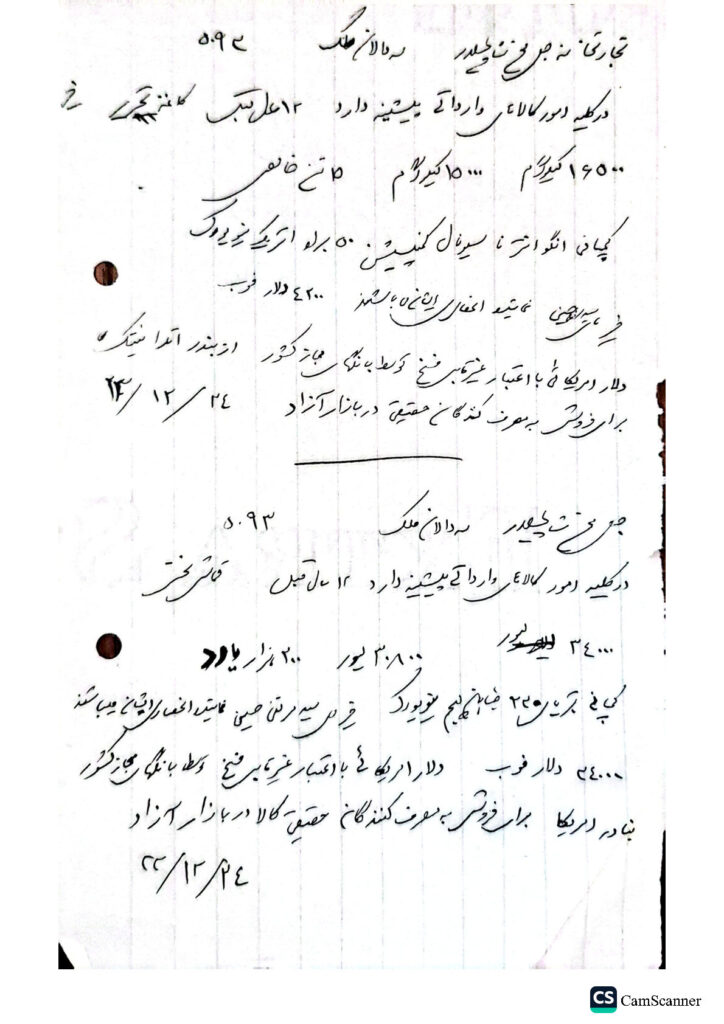
| Bank letter of credit document for the “Haji Mohsen Shalchilar & Brothers” trading firm; indicating exclusive distributorship and direct importation of goods from New York (Esfand 1324 / February–March 1946). |
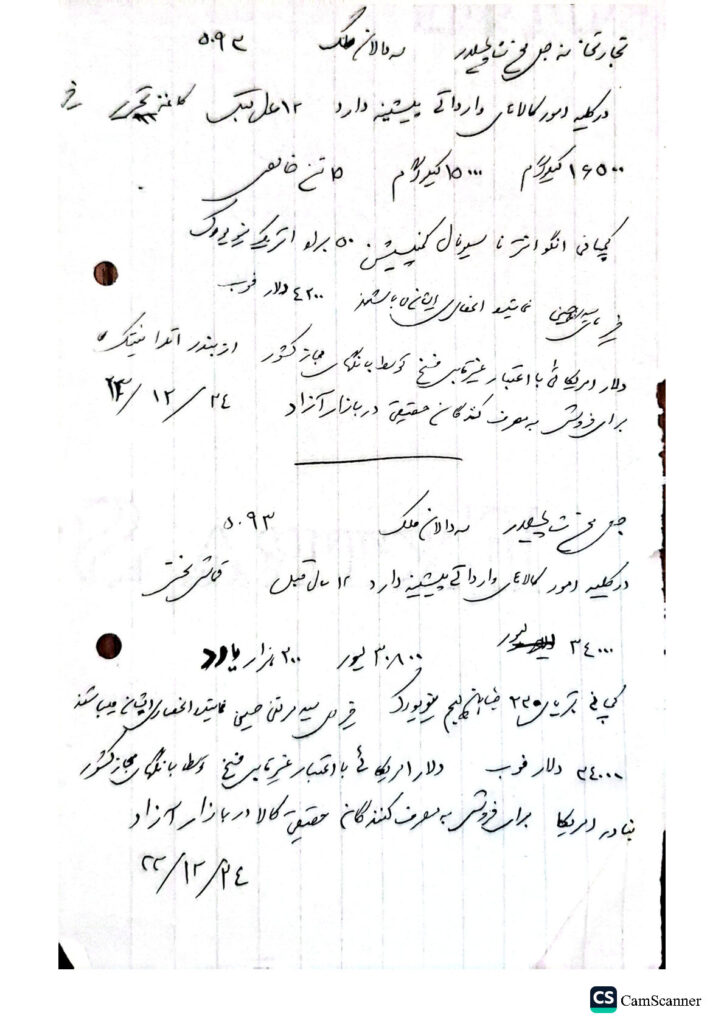
| Drafts of commercial and import documents from the historic “Seh Dalan-e Malek” complex in the Tehran Bazaar; a testament to an 80-year legacy of direct importation of office supplies from the United States. Esfand 1324 (February/March 1946). |
8. A New Chapter: Economic Transformation and the Rise of Medical Technology (1950s–1970s)
As the 1960s (Solar Hijri 1330s) drew to a close and the 1960s and 1970s (Solar Hijri 1340s and 1350s) began, Iran underwent one of the most unprecedented periods of economic and social transition in its history. During this era, the implementation of large-scale development plans, a dramatic surge in oil revenues, and the expansion of urbanization gave rise to a new middle class. This profound transformation necessitated modern infrastructure compatible with the new urban lifestyle; key among these requirements were the development of the healthcare system, the establishment of well-equipped hospitals, and an urgent need for state-of-the-art medical technology to safeguard public health.
At this critical historical juncture, the sons of the late Haj Mahmoud Shalchilar—Haj Mohsen, Haj Mehdi, and Haj Khalil—closely monitored market trends, guided by the business acumen and ingenuity that were hallmarks of their family. Recognizing that the golden age of traditional trades (such as the importation of fabrics and paper) was drawing to a close, they made a bold and pivotal decision. They shifted the focus of their family business from the supply of basic commodities to meeting the vital, modern needs of society; by establishing one of Iran’s first medical equipment companies, they took a decisive step toward advancing the nation’s healthcare system.
9. Strategic migration: Mastering cutting-edge knowledge and introducing life-saving technologies.
Haj Khalil Shalchilar played a pivotal and pioneering role in this transition. With deep insight, he realized that entering the fields of medical equipment and modern commerce was no longer feasible using traditional methods; rather, the fundamental prerequisite for this transformation was complete mastery of foreign languages and direct engagement with the sources of technology in the West.
Accordingly, Haj Khalil Agha traveled to London to pursue his education. While in England, he mastered the English language and began his studies in the field of commerce. His presence in a European hub of science and industry provided a unique opportunity to gain firsthand familiarity with the world’s most sophisticated and cutting-edge medical technologies—specifically anesthesia machines and ventilators.
Upon his return to Iran, the Shalchilar family’s medical equipment company—under the direct management of Haj Khalil Agha—undertook the pioneering initiative of importing and installing these advanced devices in hospitals across the country. At the time, this endeavor transcended mere commercial activity; it represented a monumental, worthy, and life-saving contribution to the nation’s healthcare sector—one that saved the lives of thousands of compatriots and immortalized the “Shalchilar” name in the history of Iran’s medical equipment industry.
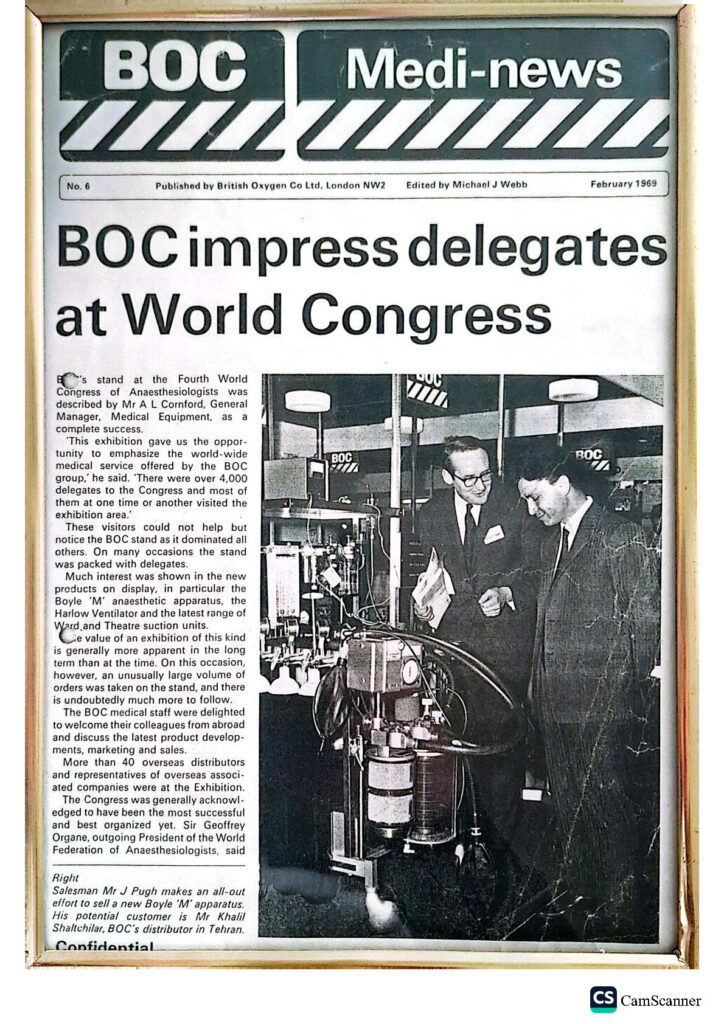
A living record of this major achievement is preserved in the archives of the prestigious British publication *BOC Medi-news* (published in London in February 1969). This bulletin, which covered the “4th World Congress of Anaesthesiologists,” features a photograph of Haj Khalil Shalchilar engaged in technical discussions regarding the importation of the era’s most advanced anesthesia equipment—specifically the Boyle ‘M’ model and Harlow ventilators—into Iran. This historical document stands as unique testimony to the fact that technology transfer within the Shalchilar family has always been conducted through the world’s most reputable scientific sources and in accordance with the highest international standards.
10. Arrival of the New Generation: Global Expansion and Reaching Full Maturity (1990s–2010s)
The valuable legacy of Haj Khalil Shalchilar was revitalized with the entry of his capable sons into the business. Haj Ali Agha (joining in the late 1980s) and Haj Hadi Agha (joining in the early 1990s) stepped into the company’s management, bringing youthful energy and the backing of their father’s esteemed reputation.
Alongside their father, and recognizing market potential as well as the healthcare sector’s growing needs, the two brothers expanded the company’s operations to a global scale. Through more than two decades of sustained effort (spanning up to the mid-2010s), they traveled extensively across the globe and succeeded in securing numerous prestigious exclusive distributorships from major international medical companies.
During this golden era, the company’s product portfolio achieved the utmost diversity, spanning everything from medical consumables and equipment to the most sophisticated specialized therapeutic devices. This intergenerational synergy brought the company to full maturity in the field of medical equipment importation, placing it at the pinnacle of prestige and prominence within the Iranian market.
11. Industrial Renaissance and the Localization of Life-Sustaining Technologies (Mid-2010s / Circa 2017)
As the mid-2010s approached—and in step with the shift in the country’s macroeconomic policies toward comprehensive support for domestic production and a reliance on internal capabilities—Shalchilar Company was poised to take its most significant historic step.
By this stage, the company had reached a position where it maintained ongoing collaborations and service operations with over 1,200 medical centers and hospitals across the vast expanse of Iran. Decades of importing, installing, providing training for, and supporting the world’s most advanced medical equipment had enabled the company’s executives and engineering team to gain an unparalleled, meticulous mastery of every aspect and technical intricacy of these strategic medical devices.
Drawing upon this deep knowledge and a precise understanding of the critical needs of healthcare professionals, the company’s management decided to evolve from a premier supplier and importer into a leading manufacturer, thereby entering the vital arena of producing ultra-advanced medical equipment.
12. Joining the Elite Club of Iran’s Medical Industry
For the Shalchilar family, entering the manufacturing sector never meant producing simple goods; instead, they directly addressed the most complex and critical needs of operating rooms and intensive care units. Following seven years of research, development, and tireless effort—supported by local engineers from the country’s top universities—the company proudly succeeded in the domestic design and production of two highly strategic devices: the ventilator and the anesthesia machine, alongside the large-scale manufacture of other medical consumables.
The significance and magnitude of this achievement become apparent when one considers that the technology for manufacturing this equipment is held by only a handful of developed nations worldwide. To date, throughout the entire history of Iran’s medical equipment sector, only three companies have mastered the technology to produce ventilators, and merely two have successfully manufactured anesthesia machines; it is a source of pride that Shalchilar stands as one of these pioneers in the nation’s healthcare industry.
13. Concluding Remarks: The Birth of “Shalchilar Mana Tak”—The Intersection of Authenticity and Academic Management
As the “Mohsen Shalchilar & Brothers” company stood at the pinnacle of advanced medical equipment manufacturing along this illustrious path, the time arrived for the family’s new generation to add yet another fruitful and dynamic branch to this sturdy tree.
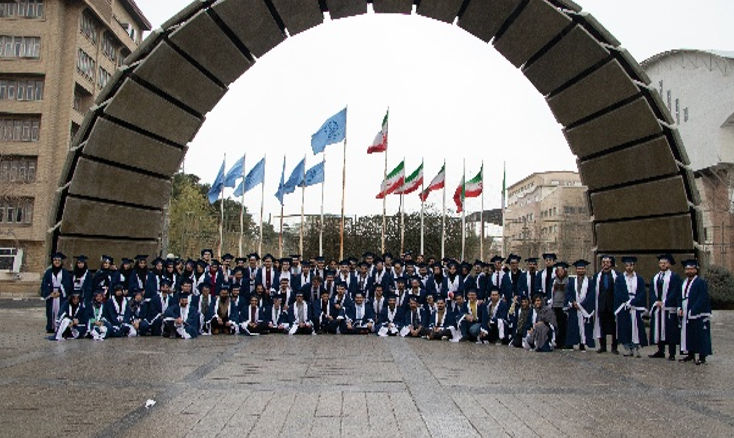
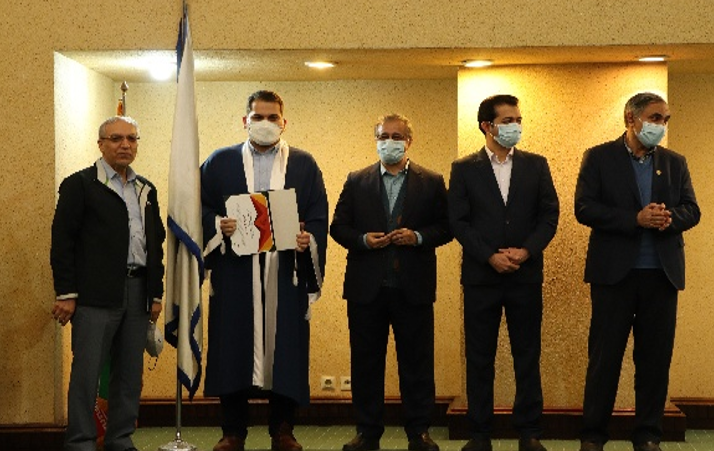
Engineer Mehdi Shalchilar—the accomplished son of Haj Ali Agha—stepped into the realm of management by recognizing modern market needs and leveraging his strong academic background: a degree in Electrical and Electronic Engineering from Amirkabir University of Technology (Tehran Polytechnic) followed by an MBA from K.N. Toosi University of Technology. With the unwavering support of his father, he founded “Shalchilar Mana Tech” to expand the family business into new sectors, adopting a thoroughly modern and academic approach.
Leveraging its family’s multi-generational trading experience, “Shalchilar Mana Tech” emerged as a leading trading company specializing in imports, international procurement, and integrated supply chain management. The company’s growth trajectory initially began with the specialized importation of office machinery and printing consumables (such as cartridges and toner). However, the Shalchilar family’s heritage and 70-year background in the healthcare industry represented a core mission that remained deeply embedded in the organization’s identity. Consequently, in a subsequent phase, “Shalchilar Mana Tech” expanded its product portfolio into the critical sector of importing and supplying medical equipment and consumables, aiming to serve as a vital link between cutting-edge global technologies and Iran’s healthcare system.
An Enduring Legacy for the Future
Today, more than three centuries after the Shalchilar ancestors first began trading in cross-border markets—and following seven decades of continuous, impactful presence in the textile and medical equipment industries—that small sapling of commerce has grown into a robust tree, deeply rooted in the soil of Iran’s economy.
The history of the Shalchilar family embodies a magnificent journey marked by both challenges and triumphs—a path that blended the authenticity of traditional Tabriz commerce with the ingenuity of industrial partnerships (at the Qazvin factory), boldly pivoted toward cutting-edge medical technologies in London, scaled the heights of domestic manufacturing for life-saving equipment (ventilators and anesthesia systems) under the banner of “Mohsen Shalchilar & Brothers,” and today, as “Shalchilar Mana Tech,” is pushing the boundaries of modern global supply chain management.
At “Shalchilar Mana Tech,” grounded in the centuries-old reputation, commitment, and heritage of our family, we look beyond mere commerce; we view our primary mission as enhancing the quality of life and safeguarding humanity’s most precious divine gift—human life itself. From the distant past to the bright horizons of the future, our journey continues steadfastly, driven by innovation, quality, and a passion for service.
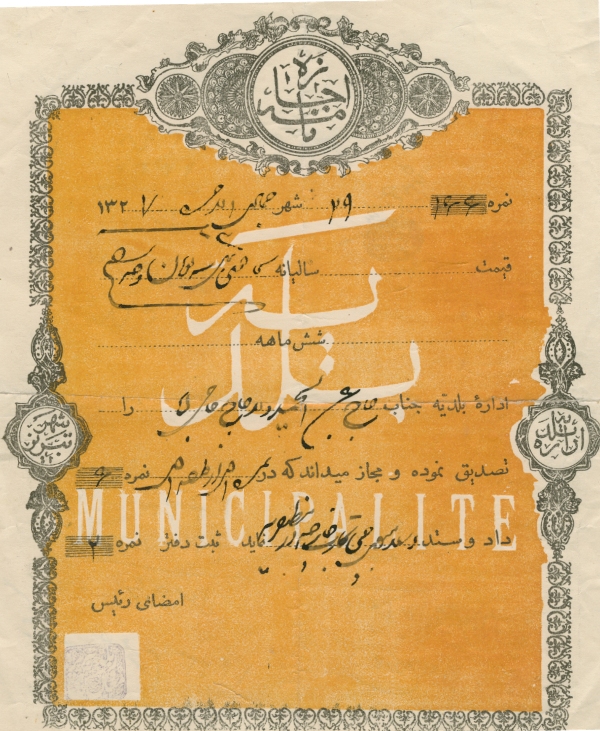
Tabriz Municipality document in the name of “Haj Abdolhamid”; dated 27/4/1288 SH (1909 AD).
Title: A Tabriz Municipality Document; A Page from the Commercial History of the Shalchilar Family
Description:
This valuable historical document, dating back to the Constitutional era, is an official record issued by the Tabriz Municipality (*Baladiyeh*). Prominently inscribed in the center are the names of the founders’ ancestors—Haj Abdolhamid and Haj Khalil—testifying to the family’s recognized and formal role in the economic landscape of that period. In the lower-left margin, the circular seal of the Tabriz Municipality is visible, featuring the French word “MUNICIPALITE.” The large “Voided” (*Batel Shod*) inscription across the document reflects the administrative practice of the time for marking the expiration of a document’s validity or the completion of periodic financial settlements.
- Date recorded in the document: 29 Jumada al-Thani 1327 AH
- Solar Hijri equivalent: 27 Tir 1288
- Gregorian equivalent: July 18, 1909
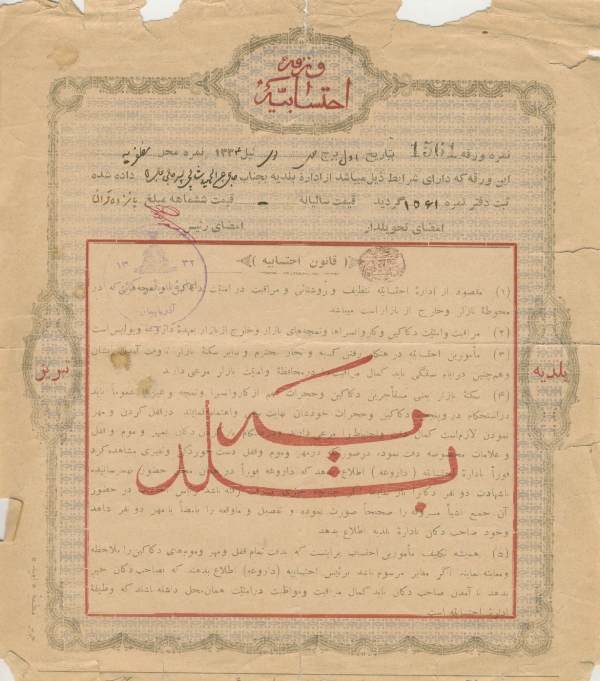
A Tabriz Bazaar assessment slip (for trade fees and permits) issued to “Haj Abdolhamid Tajer-e Shalchi”; dated Ordibehesht 1295 SH (May 1916).
Title: Tabriz Bazaar Accounting Sheet
Description:
This document, distinguished by its red border, is a historical *Ehtesabiyeh* (municipal administration) certificate. During the late Qajar era, the *Ehtesabiyeh* office was responsible for overseeing security, lighting, and order within the bazaars; such documents were issued to prominent merchants as both operating licenses and receipts for the payment of municipal levies. The second line of the document explicitly names “Jenab Haj Abdol-Hamid,” serving as compelling and striking evidence of the family’s name, their mercantile profession, and their distinguished status within the historic Tabriz Bazaar. Printed in the lower section of the document are the *Ehtesabiyeh* regulations and the obligations incumbent upon merchants regarding the maintenance of security and order within their shop units and the bazaar itself.
- Date recorded in the document: The first day of the month of Saur (Ordibehesht), 1334 AH (Lunar Hijri).
- Solar Hijri equivalent: Ordibehesht 1295
- Gregorian equivalent: May 1916
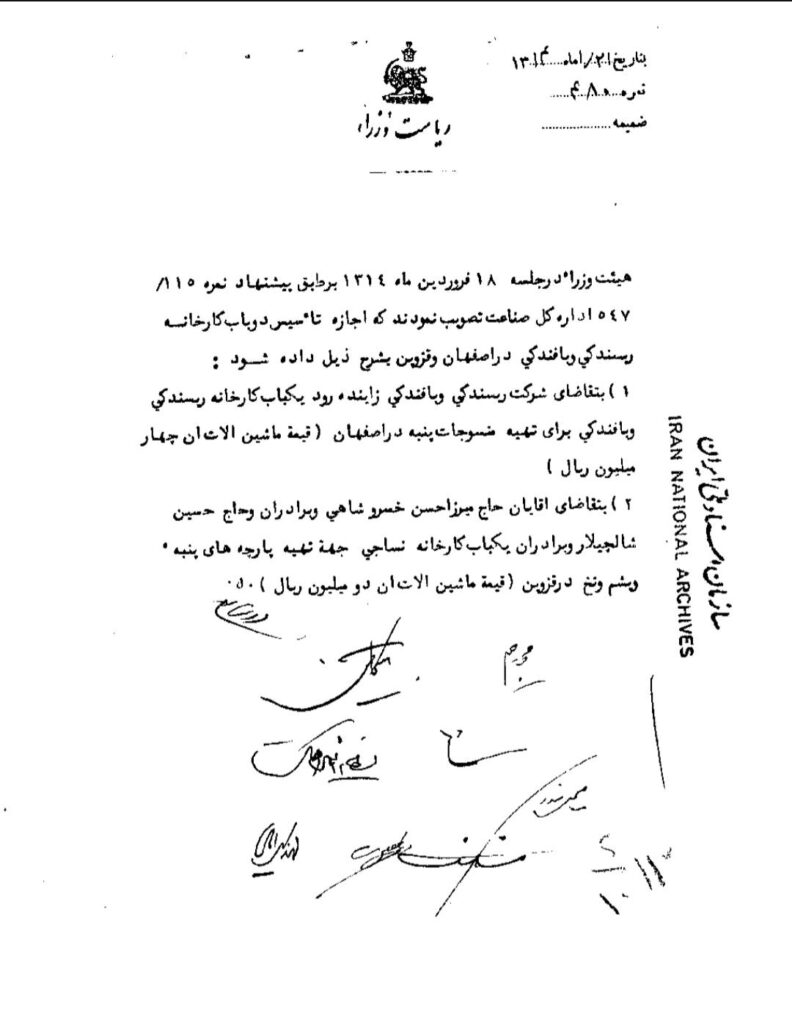
Council of Ministers resolution (Farvardin 1314 SH / April 1925); official document authorizing the establishment of the Qazvin textile factory, issued at the request of “Haj Hossein Shalchilar and Brothers.”
This document is an official government permit for the establishment of a textile factory in Qazvin by the Shalchilar family.
The details of the document’s text are as follows:
- Issuing Authority: Office of the Prime Minister (Council of Ministers)
- Date of approval: Session held on Farvardin 18, 1314 (notification date: Farvardin 21, 1314); equivalent to April 1935.
- Decision Text: Upon the proposal of the General Directorate of Industry, the Council of Ministers authorizes the establishment of two spinning and weaving factories in Isfahan and Qazvin.
- Key section (Clause 2): Clause 2 explicitly states:
“At the request of Messrs. Haj Mirza Hassan Khosrowshahi and brothers, and Haj Hossein Shalchilar and brothers, a textile factory for the production of cotton and wool fabrics and yarn is to be established in Qazvin (with machinery valued at two million Rials).”
- Signatures: The signatures of the cabinet ministers serving at the time appear at the bottom of the document.
The importance of this document for your history:
This document marks a turning point in the trajectory of the Shalchilar family, shifting from traditional trade in Tabriz toward “modern industrial enterprise.” It establishes that your ancestors—Haj Hossein Shalchilar and his brothers—were pioneers of Iran’s textile industry; in 1935, they founded the Qazvin factory through a substantial investment—with two million rials representing a vast sum for machinery at the time. Their collaboration with the prominent Khosrowshahi family is also a noteworthy detail in this document.
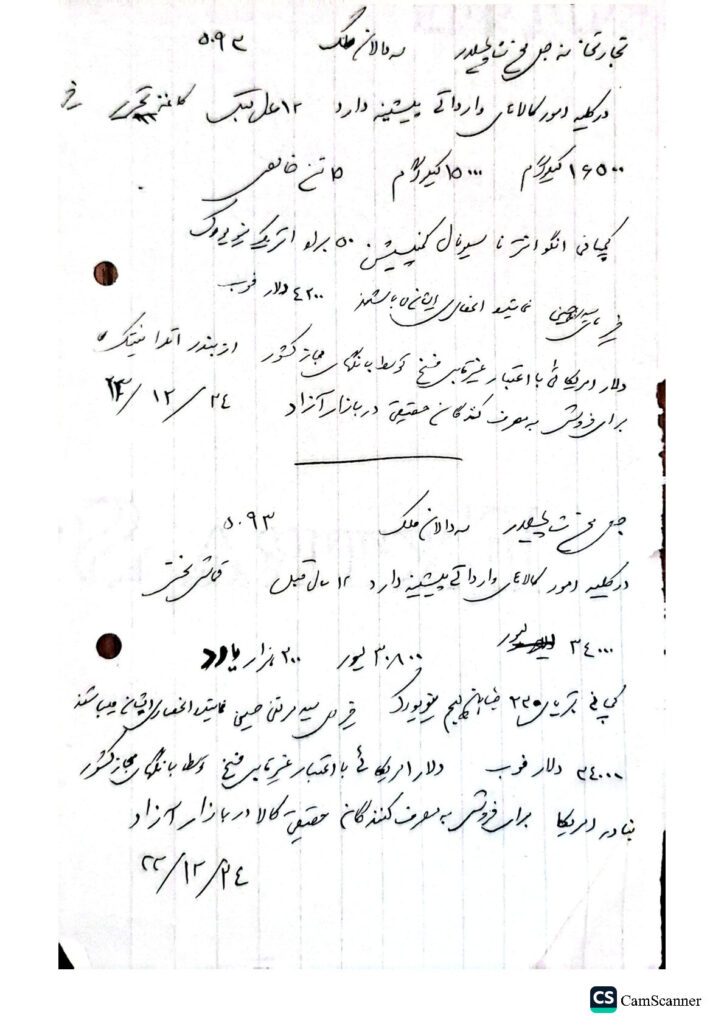
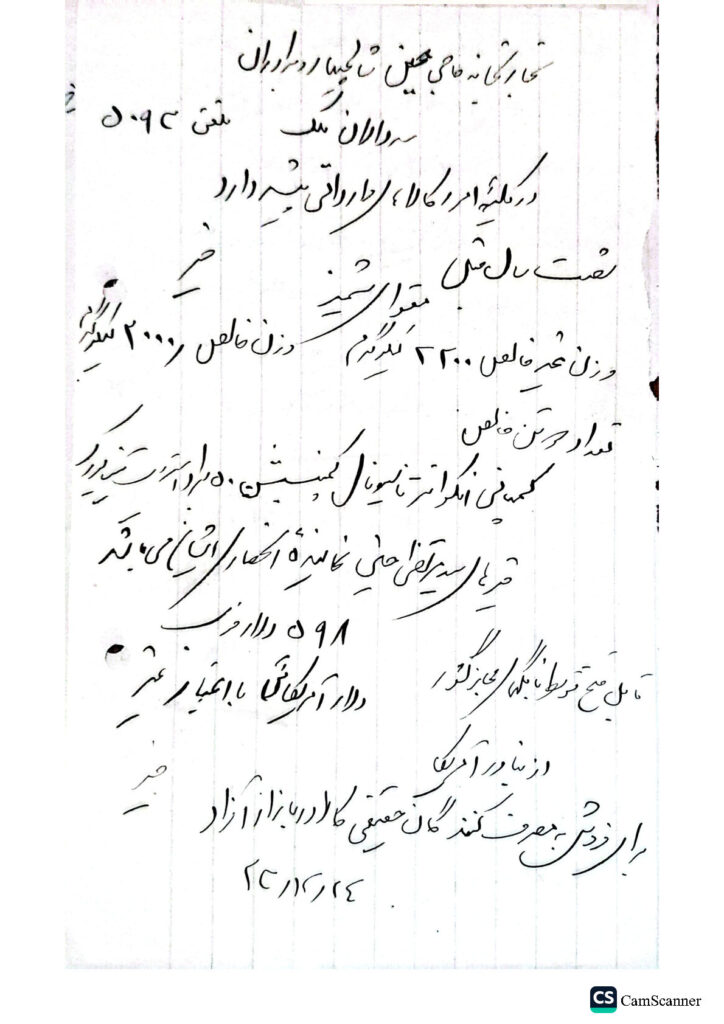
Key points extracted from both documents:
- Trade Name: The name “Haji Mohsen Shalchilar & Brothers Trading House” (or “Haji Mohsen Shalchilar”) appears at the top of all the sheets.
- Historical Address: The address is listed as “Seh Dalan-e Malek.” Located in the Grand Bazaar of Tehran, the Seh Dalan-e Malek *Saray* (commercial complex) was one of Iran’s most prestigious and historic trading hubs, housing the shops of top-tier merchants.
- Four-digit telephone numbers: The numbers 5094 and 5093 appear at the top of the documents. Possessing a dedicated telephone line at that time was an indication of modernity and the scale of the trading firm’s operations.
- Type of imported goods: The importation of “writing paper” in high tonnages is explicitly mentioned (for instance, 2,000 kilograms in one instance and even higher figures in another). (This directly reflects the historical roots of your current operations in supplying office requisites and office machinery.)
- The text states that the goods were purchased from “International Commission Company, 50 Broadway, New York, USA” and “Brown Company, 24 Fifth Avenue, New York,” and that the Shalchilar trading firm is “their exclusive representative in Tehran.”
- Modern Financial Transactions: The amounts specified in the documents are denominated in “FOB dollars” and are payable in “US dollars via irrevocable letters of credit issued by the country’s authorized banks,” demonstrating the use of state-of-the-art international trade instruments (Letters of Credit) at the time.
- Date: The dates written at the bottom of the pages are Esfand 1324 (corresponding to March 1946).
These documents demonstrate that “direct importation,” “unmediated relationships with global manufacturers (New York),” and “the supply of office and paper products” are ingrained in the very DNA of this business; your claim is not merely an advertising slogan, but an 80-year legacy (within the modern international sector).
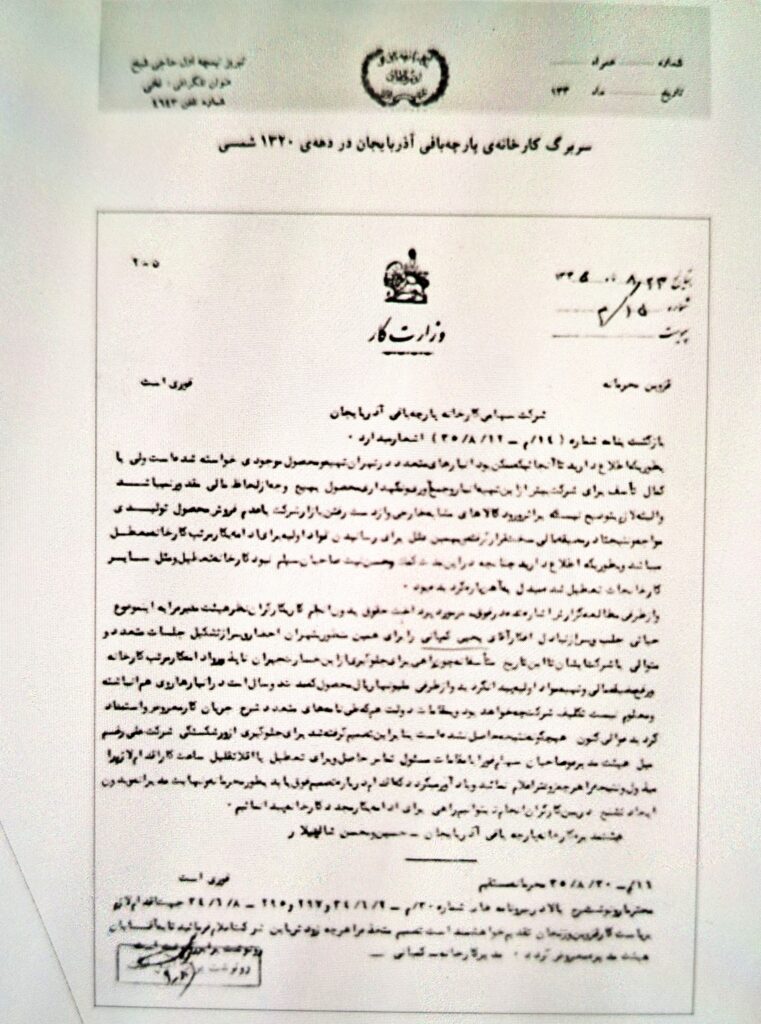
In our historical archives, there is a document that, more than anything else, captures the spirit defining the values of the Shalchilar family: a formal yet somber letter—a “crisis warning and plea for government assistance”—dating back to the mid-1950s. This document stands as a testament to a pivotal turning point in the history of our business.
At that time, the Shalchilar brothers—serving as the board of directors of a major textile factory—outlined in a candid letter the imminent risk of bankruptcy facing the national industry due to the economic policies then in place. The key points of this letter, which today form the foundation of our modern strategy, were as follows:
- The crisis of excessive imports: an influx of similar foreign goods that had devastated the market for domestic products.
- Capital accumulation and the liquidity crisis: millions of rials’ worth of products remained in warehouses, and the company faced challenges in procuring raw materials and even paying workers’ wages.
However, the most significant aspect of this document is the ethical choice made by the managers during that crisis. Noting the “good faith of the shareholders,” the letter states that the sole reason the factory remained afloat was the owners’ personal commitment to preventing their workers from swelling the ranks of the unemployed. They absorbed financial losses and drew upon their own personal capital to keep the wheels of industry turning and sustain their workers’ livelihoods.
A strength, not a weakness!
This document stands as proof of the deep sense of national concern and social responsibility embedded in our organizational DNA. That historical experience taught us that survival and growth sometimes lie in a strategic shift of direction. The challenging production conditions of that era steered us toward a strategic transition: moving away from an unsupported industry and pivoting toward specialized imports and the supply of vital goods required by the country.
As stated in our historical analyses:
The Shalchilar family’s commitment to preserving human capital is evident in historical records; even amidst the economic crises of the 1950s and the influx of foreign goods, the factory management stood firm—pushing to the brink of bankruptcy—to safeguard workers’ jobs. These invaluable experiences have laid the foundation for our current astute strategies regarding principled importation and secure product sourcing.
Today, at “Shalchilar Mana Tak,” we are the heirs to that same commitment and strategic acumen.
- Brand: Brother – one of the most famous Japanese companies in the field of office machine manufacturing.
- Model: Deluxe (DELUXE 750TR)
- Language: As you can see on the keys, this device features a Persian keyboard (with specific Persian characters such as “پ”, “چ”, “ژ”, and “گ”), indicating that it was intended for the Iranian market.
- Year of construction / Age:
This series of portable Brother typewriters—featuring this specific design style (cream-colored body, black keys, and a distinctive body shape)—was primarily manufactured during the 1970s.
Therefore, this device dates back about 50 years.
“From the 50-year-old Brother typewriter to today’s most advanced digital printing systems, we at Shalchilar Mana Tech have lived through the evolution of office machinery—all to provide you with the very best and most up-to-date solutions.”
Title: Bridging Past and Future: The Evolution of Office Machines < 2 >< 3 > Subtitle: From the Clatter of Mechanical Keys to the Silence of Modern Smart Printers < 5 >< 6 > Article Text
Alongside commercial documents and medical equipment, certain items in our collection’s archive serve as silent witnesses to the passage of time and profound technological changes. This device is a classic Brother typewriter (model DELUXE 750TR) featuring a Persian keyboard, dating back to the 1970s.
In the era when mechanical machines served as the beating heart of written communication and business correspondence, the precision and quality of office equipment were of paramount importance. Today—half a century removed from the age of manual typewriters—”Shalchilar Mana Tak” and its specialized subsidiary, “Dr. Cartridge,” draw upon a deep understanding of this evolutionary journey to supply state-of-the-art office machines, printers, and digital printing supplies to organizations and consumers alike. While we remain rooted in authenticity, our vision is always fixed on the future and emerging technologies.
Introduction: The Need for Transformation in Iran’s Operating Rooms
The history of the development of healthcare infrastructure and medical equipment in Iran is replete with turning points and bold decisions that have permanently altered the trajectory of public health. During the 1950s and 1960s, alongside the modernization and expansion of the nation’s hospital facilities, there was an acute need for advanced operating room equipment—particularly anesthesia machines and ventilators. Transferring these life-saving technologies from leading nations required a command of cutting-edge knowledge and foreign languages, as well as the establishment of a robust international network—a path paved by visionary pioneers.
A Document from History: London, Winter 1969
One of the most authoritative historical documents illustrating this technology transfer appears in Issue 6 of the British publication *BOC Medi-news* (published in February 1969). At the time, the British Oxygen Company (BOC) was considered a global giant—unrivaled in its field—in the manufacture of medical gas and anesthesia equipment.
This publication presents a detailed report on the “Fourth World Congress of Anesthesiologists.” However, what distinguishes this bulletin in the history of Iranian medicine is an image featured in the corner of its front page. In this photograph, the late Haj Khalil Shalchilar is seen closely examining and engaging in technical discussions with a sales representative from the British company regarding the purchase of a new generation of anesthesia machines (the Boyle ‘M’ model).
The caption in this publication explicitly identifies him as the “exclusive distributor for BOC in Tehran.” The presence of an Iranian specialist and businessman at the highest level of global scientific circles more than half a century ago demonstrates a shrewd strategy for establishing direct contact with the sources of technology.
From Technology Imports to Saving Lives
The Boyle anesthesia machines and Harlow ventilators showcased at this congress represented the most advanced safety standards for surgical patients of their time. Their introduction to Iran by the Shalchilar medical equipment company—managed by Haj Khalil Agha, himself a business graduate from London—was not merely a commercial achievement; it brought about a fundamental transformation in the quality and safety of operating rooms, enabling Iranian surgeons to perform longer and more complex procedures.

